
Spondylolisthesis: When a Vertebra Slips Out of Place
Hearing that a bone in your spine has “slipped” sounds alarming. In most cases it happens slowly, it’s very common, and it can be treated, often without surgery.
What Is Spondylolisthesis?
Spondylolisthesis (spon-dee-low-lis-THEE-sis) means one vertebra has slid forward over the bone below it. It most often happens in the lower back, at the L4-L5 or L5-S1 levels.
A small slip may cause no symptoms at all. When it does, it can cause low back pain, or it can narrow the space for the nerves and cause leg pain, numbness or heaviness when you walk.
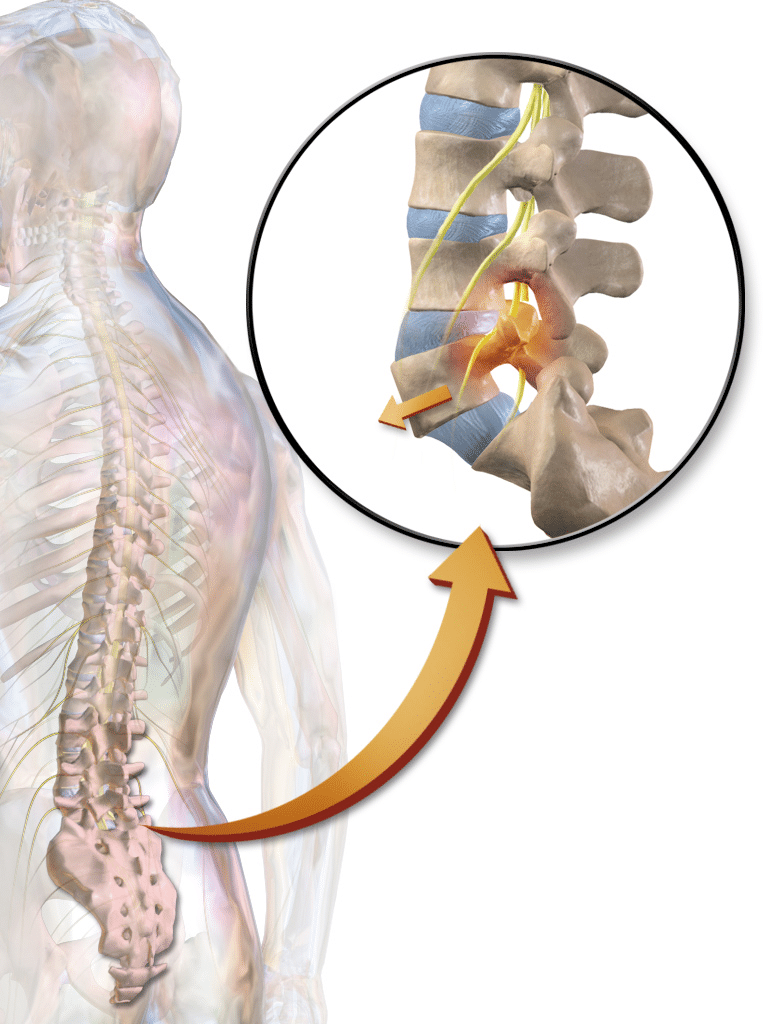
Doctors grade the slip from I to IV based on how far the vertebra has moved. Most people have a grade I or II slip, and many do well with physical therapy and other non-surgical treatment. When symptoms persist, surgery can relieve the pressure on the nerves and stabilize the spine.
What’s Happening in Your Spine
There are two common types:
- Degenerative spondylolisthesis: the most common type in adults over 50, especially women. Arthritis loosens the small facet joints that normally hold each vertebra in place, and the bone gradually slides forward, usually at L4-L5. It often comes with spinal stenosis.
- Isthmic spondylolisthesis: caused by a small stress fracture in a part of the vertebra called the pars interarticularis (spondylolysis). It often starts in childhood or adolescence, especially in athletes such as gymnasts and football linemen, and usually affects L5-S1.
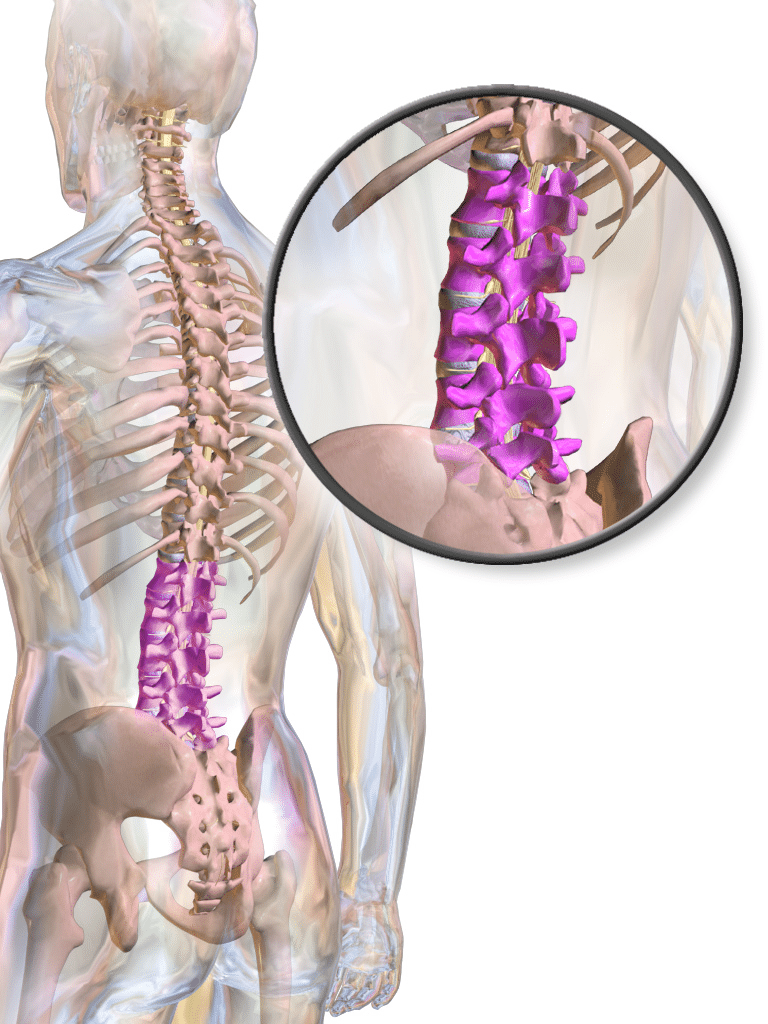
Symptoms of Spondylolisthesis
Common symptoms
- Low back pain, often worse with standing, walking or bending backward
- Pain, numbness or tingling that travels into the buttocks or legs (sciatica)
- Leg heaviness or cramping with walking that improves when you sit
- Stiffness in the lower back
Symptoms patients often ignore
- Very tight hamstrings that don’t loosen with stretching
- Back pain that feels better leaning forward on a shopping cart
- A change in posture or a “step-off” you can feel in the lower back
- Back pain in a teen athlete that doesn’t go away with rest
When it’s an emergency: Call 911 or go to the nearest emergency room if you develop new bladder or bowel problems, numbness in the groin, or weakness in both legs.
Causes and Risk Factors
- Age-related arthritis of the facet joints
- A pars stress fracture, often from repeated arching of the back in sports
- Being female and over 50 (for the degenerative type)
- Family history and inherited bone shape
- Less commonly, injury, previous spine surgery or bone disease
How We Diagnose Spondylolisthesis
- History and exam: where the pain is, whether it travels into the legs, and a neurological check of strength, reflexes and sensation
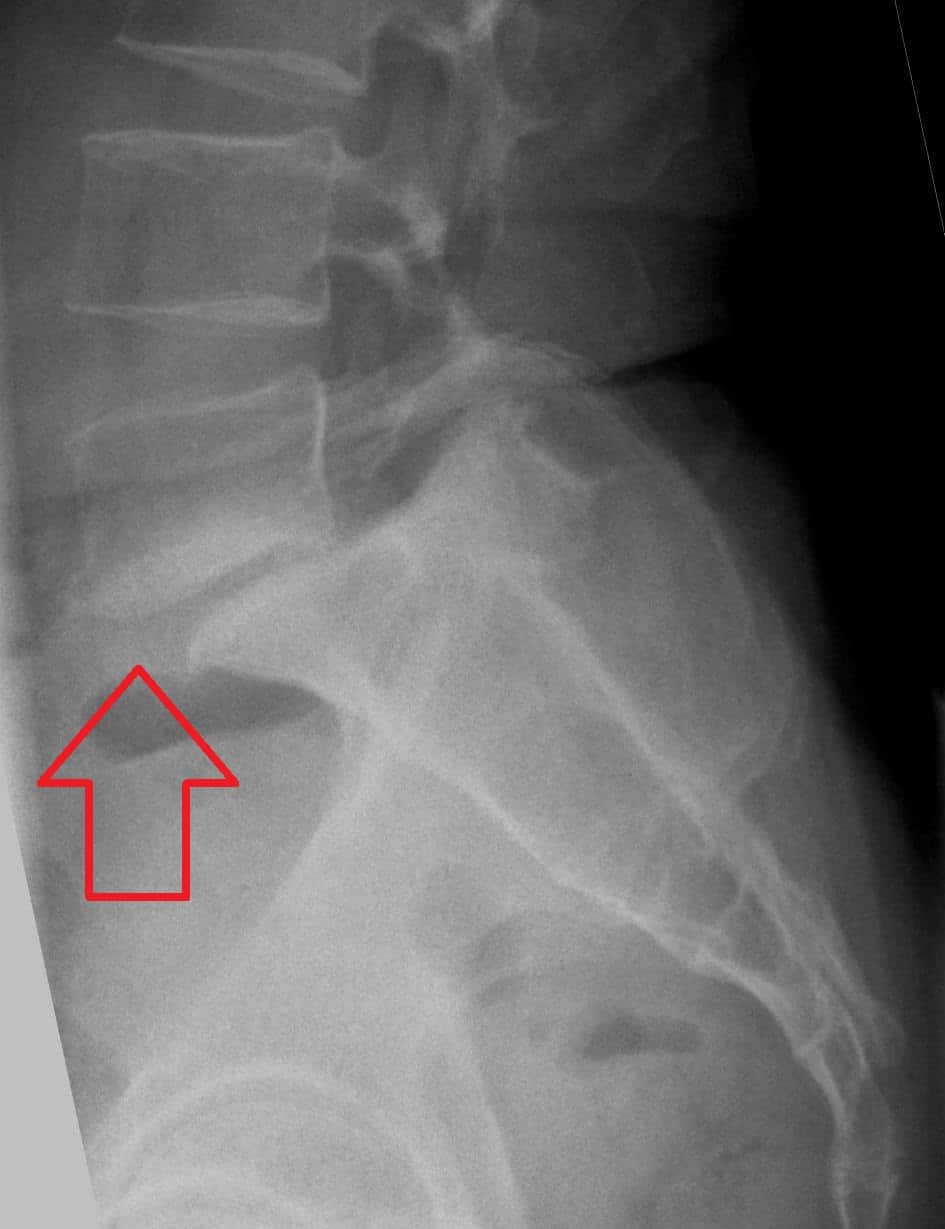
- Standing X-rays with bending views: the key test. They show how far the vertebra has slipped and whether it moves when you bend, which tells us if the spine is unstable.
- MRI: shows pinched nerves, stenosis and disc health
- CT scan: shows pars fractures and bone detail and helps plan surgery
Treatment Options
Non-surgical treatment comes first
- Physical therapy: core and hip strengthening, hamstring flexibility and posture work
- Activity changes: avoiding heavy lifting and repeated backward bending during flares
- Medications: anti-inflammatories and nerve-pain medications
- Epidural steroid injections: to calm irritated nerves
- Bracing: sometimes used for young athletes with a new pars fracture
When surgery makes sense
Surgery is considered when back or leg pain persists despite good conservative care, when walking is limited, when there is nerve weakness, or when the slip is unstable or getting worse.
Because the spine has shifted, surgery usually combines two goals: freeing the pinched nerves and holding the vertebrae in the right position so they can’t keep slipping. Dr. Grunch specializes in minimally invasive techniques for both:
- Decompression: removing the bone spurs and thickened tissue that pinch the nerves (laminotomy or foraminotomy)
- Minimally invasive fusion: joining the slipped vertebra to the one below with screws and a spacer placed through small incisions, often partially realigning the slip. Learn more about lumbar fusion approaches.
Why Choose Dr. Betsy Grunch for Spondylolisthesis
- Duke-trained: neurosurgical residency and spine research fellowship at Duke University School of Medicine, where she received the Spine Young Investigator Award
- Experience you can count on: in practice since 2013, performing 400 to 600 surgeries a year and more than 5,000 procedures over her career
- Minimally invasive fusion: smaller incisions and less muscle disruption, which can mean less pain and a quicker return to walking
- Surgery only when it helps: board-certified (FAANS, FACS, FCNS), she starts with the least invasive treatment that will work
- Clear answers: known online as Ladyspinedoc, she makes sure you understand your imaging and every option in front of you
What to Expect If You Need Surgery
Before surgery
You’ll meet with Dr. Grunch or one of her physician assistants to review your X-rays, MRI and CT and plan your procedure. Our team coordinates pre-operative testing and reviews your medications. Quitting smoking before surgery is especially important, because nicotine slows bone healing.
Procedure day
A minimally invasive fusion usually takes two to four hours, depending on the number of levels. Most patients stay in the hospital one or two nights.
Recovery timeline
- Day 1: up and walking with help
- Weeks 1-2: home, walking several times a day; leg pain often already improved
- Weeks 2-6: many desk workers return to work; no bending, lifting or twisting
- Months 2-3: physical therapy and gradually more activity
- Months 6-12: the bones continue to fuse into one solid segment
Frequently Asked Questions
Will the vertebra keep slipping?
Many slips stay stable for years, especially degenerative ones. Bending X-rays show whether yours is moving. Worsening symptoms or a slip that increases over time are reasons to consider stabilization.
Do I need a fusion?
Not always. Many people do well without surgery. When surgery is needed for spondylolisthesis, a fusion is often recommended because removing bone to free the nerves can make an already-slipped spine less stable. Dr. Grunch will explain why for your specific case.
Can I still exercise?
Yes. Staying active is one of the best things you can do. Core strengthening, walking, swimming and cycling are usually good choices. Heavy lifting and repeated backward bending may need to be limited.
My teenager has spondylolysis. Will they need surgery?
Most young athletes with a pars stress fracture get better with rest from sports, physical therapy and sometimes a brace. Surgery is rarely needed.
What does “grade” mean?
The grade describes how far the vertebra has slipped: grade I is less than 25%, grade II is 25-50%, and grades III and IV are larger slips. Most adults have grade I or II.
Take the First Step Toward Relief
Whether you need a diagnosis, a treatment plan or a second opinion, Dr. Grunch and the Southern Neurosurgery team are here to help.
Call 470-293-9800 to schedule an appointment or contact us online.
Have a question first? Ask our virtual assistant anything, 24/7.
We see patients across metro Atlanta and North Georgia at our offices in Gainesville, Sandy Springs and South Atlanta (Riverdale). Find the office nearest you.
This page is for educational purposes only and is not a substitute for medical advice. If you have bladder or bowel changes, groin numbness or weakness in both legs, call 911 or go to the nearest emergency room.