
Cauda Equina Syndrome: A Spine Emergency You Need to Recognize
If you have new numbness in your groin or inner thighs, trouble urinating or controlling your bladder or bowels, or weakness in both legs, call 911 or go to the nearest emergency room now. Cauda equina syndrome needs emergency treatment.
What Is Cauda Equina Syndrome?
At the bottom of the spinal canal, the spinal cord ends and continues as a bundle of nerve roots that looks like a horse’s tail, which is what “cauda equina” means in Latin. These nerves control your legs, bladder, bowels and sexual function, and carry feeling from the groin and buttocks.
Cauda equina syndrome happens when something suddenly squeezes these nerves. It is rare, but it is a true surgical emergency. Fast diagnosis and surgery to relieve the pressure give the best chance of preserving bladder, bowel, sexual and leg function.
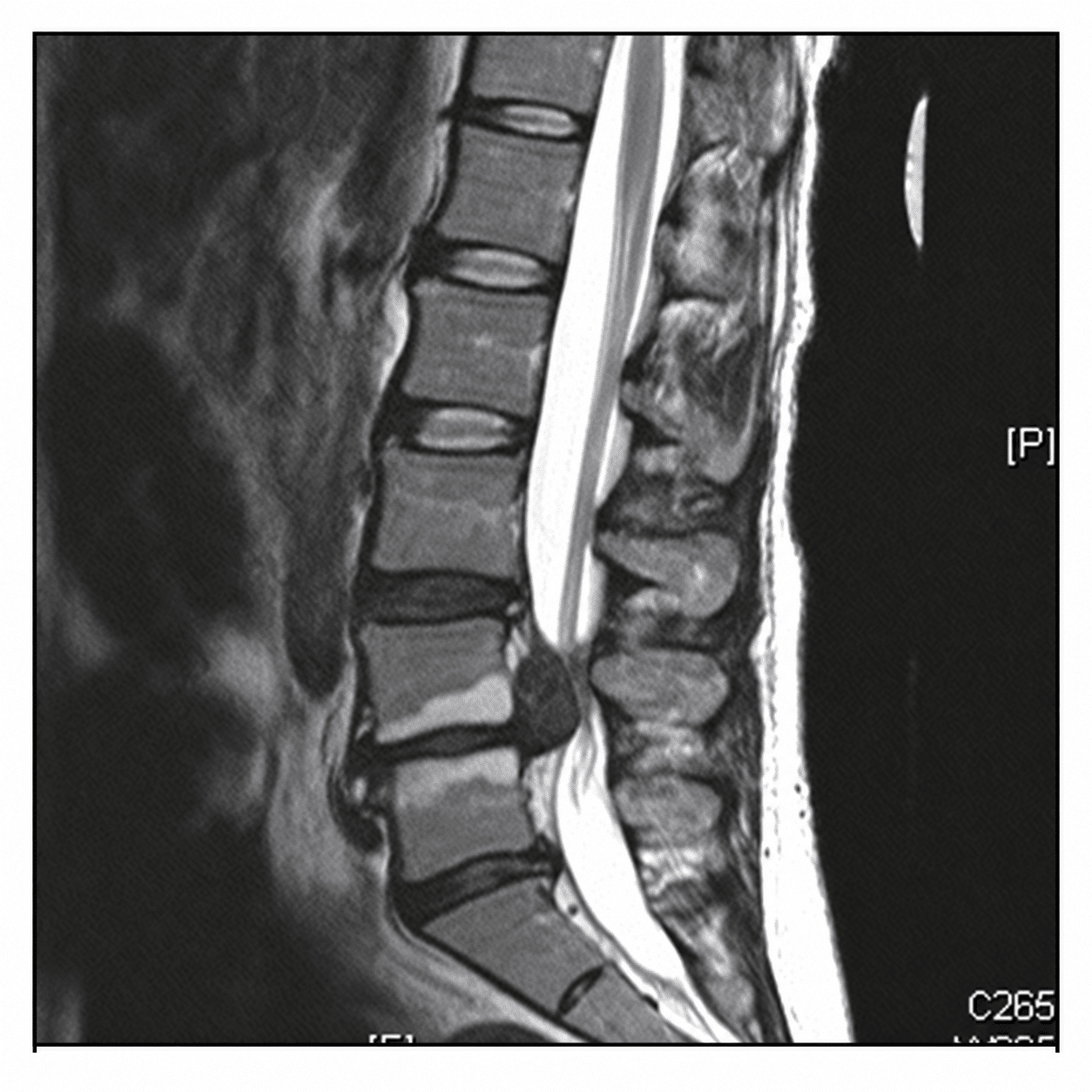
What’s Happening in Your Spine
The nerves of the cauda equina share a tight space in the lower spinal canal. When that space is suddenly filled, all of the nerves are compressed at once. The most common causes are:
Warning Signs
Red-flag symptoms: go to the emergency room
- Numbness in the “saddle” area: groin, genitals, buttocks or inner thighs
- Trouble starting urination, a weak stream, or not feeling when your bladder is full
- Leaking urine or losing control of your bowels
- New sexual dysfunction or loss of sensation
- Weakness or numbness in both legs, or rapidly worsening weakness
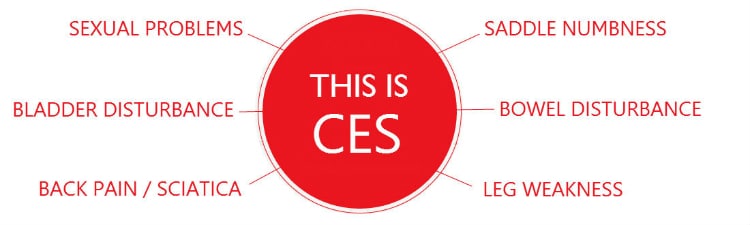
Symptoms that often come first
- Severe low back pain
- Sciatica in one or both legs
Not everyone with severe sciatica has cauda equina syndrome. But anyone with back or leg pain who develops any of the red-flag symptoms above should be seen in an emergency room right away, not at a routine office visit.
If You Think You Have It: What to Do
How Cauda Equina Syndrome Is Diagnosed
Treatment
Cauda equina syndrome is treated with urgent surgery to remove whatever is compressing the nerves. Research shows that outcomes are best when decompression happens quickly, ideally within the first 24 to 48 hours of symptoms. Depending on the cause, surgery may include:
Recovery
Recovery depends a great deal on how severe the compression was and how quickly it was treated. Some patients recover fully, while others have lasting effects.
Frequently Asked Questions
Follow-Up Care with Southern Neurosurgery
For red-flag symptoms, call 911 or go to the nearest emergency room. Do not wait for an appointment.
For follow-up care, a second opinion, or questions about back and leg symptoms that are not an emergency, call 470-293-9800 or contact us online. Have a non-urgent question? Ask our virtual assistant, 24/7.
We see patients across metro Atlanta and North Georgia at our offices in:
This page is for educational purposes only and is not a substitute for medical advice. If you have sudden weakness, numbness in the groin, or bladder or bowel changes, call 911 or go to the nearest emergency room.